Update, September 9: SEnuke AI is now live and I’ve been testing it hands-on since launch. This review has been rewritten to reflect actual use, not launch material. It’s no longer a preview — and it’s no longer entirely positive.
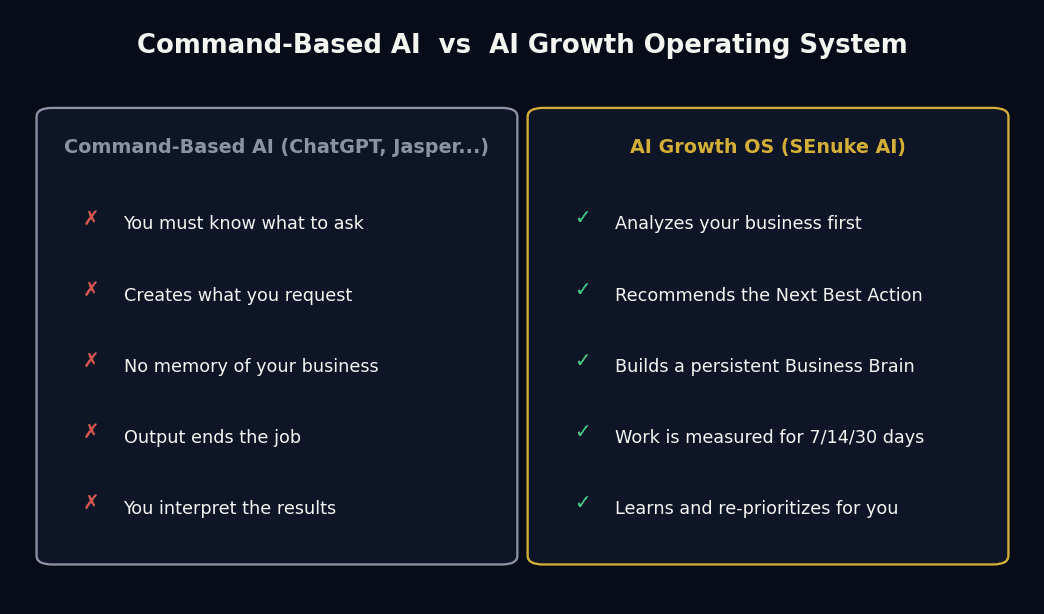
Every AI marketing tool waits for you to ask. SEnuke AI’s pitch is the opposite: it studies your business, decides what to do next, and executes what you approve. Great concept — I said so before launch. Now I’ve put real projects through it, and my first impression is more sober: as it stands today, I don’t think it’s worth $79/month for my use case. Here’s exactly what I found, good and bad, so you can judge for yourself.
Key Takeaways (After Hands-On Testing)
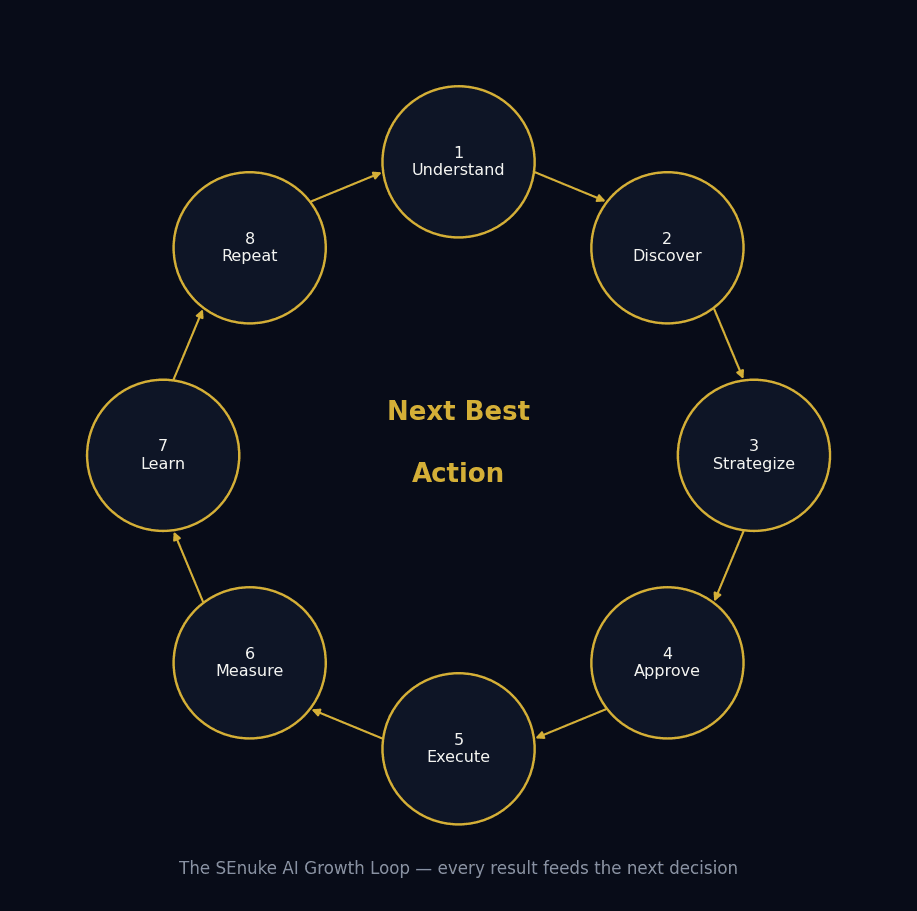
- The architecture — Growth Loop, Next Best Action, approval gates — is still the most interesting thing about it. The execution of that idea is where it currently falls short.
- Keyword data is the weak point: suggestions are visibly assembled from your own inputs, research results mix in unrelated terms, and URL-generated search terms showed 0 monthly searches across the board in my tests.
- The Entrepreneur plan’s 4,000 monthly credits are tighter than they sound, and there’s no BYOK (bring your own API key) option.
- Credit transparency is genuinely good: you see cost estimates before actions run, and there’s a full cost table.
- I haven’t reached the execution phase yet — the continuous improvement loop is the part I’m still giving the rest of my paid month to prove itself.
What Is an AI Growth Operating System?
Quick recap for new readers: an AI Growth Operating System connects business analysis, strategy, execution and measurement into one loop instead of doing single tasks on command. It builds a model of your business (the “Business Brain”), ranks opportunities, proposes work, and measures what ships. I break down the category — and a ten-question test for any tool claiming the label — in my deep-dive on what an AI Growth Operating System actually is. The category is real and worth watching. The question is whether this first implementation delivers it.
The Official Demo vs My Reality
The vendor walkthrough is polished — one Entrepreneur project from setup to a finished WordPress site:
My own onboarding was less smooth. Setup is lengthy and at times confusing — I threw two of my current projects in to see how it handles real material, and fair warning: I haven’t tried every mode, and a more careful setup might produce better results. But a platform that leads with “AI figures out your business” shouldn’t depend this heavily on the user getting the setup perfect.
Where It Disappointed Me
Keyword research: the data isn’t there yet
This was my biggest letdown. The keyword suggestions were quite obviously stitched together from the information I’d entered — not discovered from real search behavior. The research results then mixed in genuinely unrelated keywords, which makes finding the good ones tedious, and I couldn’t find a proper filter to clean up the list. The search terms it generated from my URL had zero monthly searches across the board — nobody searches for “how work digital courses and guides” or “SEnuke AI Review Services in australia.”
It also leans on Search Console data and shows CPC and paid-ads difficulty — which tells me very little when I’m building a site for organic search. At this monthly price I’d expect proper search data as the foundation, and I’d happily pay the data API cost myself. There’s currently no option for that.
Credits and no BYOK
The Entrepreneur plan includes 4,000 credits per month. Many actions cost nothing, but the credits still feel limited once you work seriously — and there’s no bring-your-own-key option to run heavy workloads on your own API account. For a $79/month platform aimed at power users, that combination stings.
Website scan and integrations
The website scan produced a lot of false positives on my sites — the kind of noise that erodes trust in the daily-check reports. And so far I haven’t found direct integration options beyond the basics; possibly more appears at the execution step, which I haven’t reached yet.
What It Gets Right
Credit where due. Cost transparency is genuinely well done: before anything spends credits you get an estimate, and there’s a clear table of what each action costs — more honesty than most AI tools manage. Website creation offers real choice: HTML, WordPress, Shopify, a developer handoff package, or SEnuke-internal hosting — no platform lock-in. And the approval-gate design (Manual / Assisted / Trusted) remains the right call; I’ve written about why in my guide to why the best AI agents ask before they act.
An Unexpected Win: The Expired-Domain Experiment
Here’s the twist. Alongside testing, I put a day or two of work into an SEO-optimized topic site on an old SEnuke-related domain I bought — content built with AI from my research plus the vendor’s launch material. Three days after going live, it’s already pulling search engine traffic. The site needs a rework now that I know what I know, but it proves a point: expired domains with genuinely good content on them still work, at least short-term. Part of the work may be wasted; the material and the lesson aren’t. I’ll publish a full tutorial on how I did it — and whether that free traffic converts into anything valuable — in my private marketer community.
Pricing Reality Check
Founding pricing runs through September 15: $79/month Entrepreneur, $147 Business, $497 Agency (then $97/$197/$697), annual at 12-for-10. Judged purely on what I’ve experienced in week one, the Entrepreneur plan doesn’t yet deliver $79 of monthly value for an organic-search-focused marketer like me. Two honest caveats: my project selection may not have been ideal for the system — a local business might fare notably better than my use case. And I haven’t seen the improvement loop work over time, which is the platform’s core promise. I’m testing the rest of my month specifically to answer that.
Verdict So Far
Right architecture, immature data layer. If the keyword foundation and credit economics improve, this could become what the launch material promises — the loop-based design is ahead of anything in its price class conceptually. Today, I can’t recommend it without reservations. If you want to evaluate it yourself while founding pricing lasts, go monthly, not annual, and stress-test the keyword research against your niche in week one:
If you do test it through my link, my six-bonus stack comes with it — including my AI Visibility Booster, plus access to my private WhatsApp marketer group where the expired-domain tutorial lands first. See the full bonus stack here.
FAQ
Is SEnuke AI worth $79 a month?
Based on my first week: not yet, for organic-search-focused marketers. The keyword data quality and credit limits don’t match the price. It may be worth it for local businesses or users who value the strategy-and-approval workflow over raw data — and that could change if the improvement loop proves itself.
How many credits does SEnuke AI include?
The Entrepreneur plan includes 4,000 credits per month. Many actions are free, but credit-consuming work is estimated up front and listed in a cost table. There is currently no bring-your-own-API-key option.
What website formats can SEnuke AI create?
Five output paths: static HTML, WordPress, Shopify, a developer handoff package, or hosting on SEnuke’s internal platform. That flexibility is one of its genuine strengths.
Is SEnuke AI the same as the old SEnuke?
No. The original SEnuke (2008–~2021) automated link building. SEnuke AI is a strategy-and-execution platform with human approval built in. Same founder, entirely different product.
Should I buy the annual plan?
Not on first impressions. The 12-for-10 annual deal only makes sense after a monthly plan has proven the platform fits your workflow. Test a month first.
Disclosure: This post contains affiliate links. If you subscribe through them I may earn a commission at no extra cost to you. This review reflects my personal hands-on experience during launch week (September 2026); the platform may improve, and your results and experience may differ.