Most AI video launches get the same reaction for about five minutes.
People see a flashy demo, post “game over” on social media, and then quietly go back to the same messy workflow stack they were using before.
Gemini Omni feels more important than that.
What Google just introduced is not just another text-to-video tool with prettier outputs. It looks more like a serious attempt to merge reasoning, generation, editing, and multimodal control into one creative system. That matters because the real problem in AI content has never been whether a model can make something look impressive for ten seconds.
The real problem is whether it can help produce useful, repeatable, client-ready work without turning every project into a small software pipeline held together by hope and browser tabs.
That is where Gemini Omni starts to matter.
What Gemini Omni actually is
Google describes Gemini Omni as the place where Gemini’s reasoning meets creation. On the official Gemini Omni page, Google frames it as a leap in world understanding, multimodality, and editing. In plain English, that means it is designed to do more than spit out isolated clips.
According to Google DeepMind’s Gemini Omni Flash model card, published on May 19, 2026, the model supports:
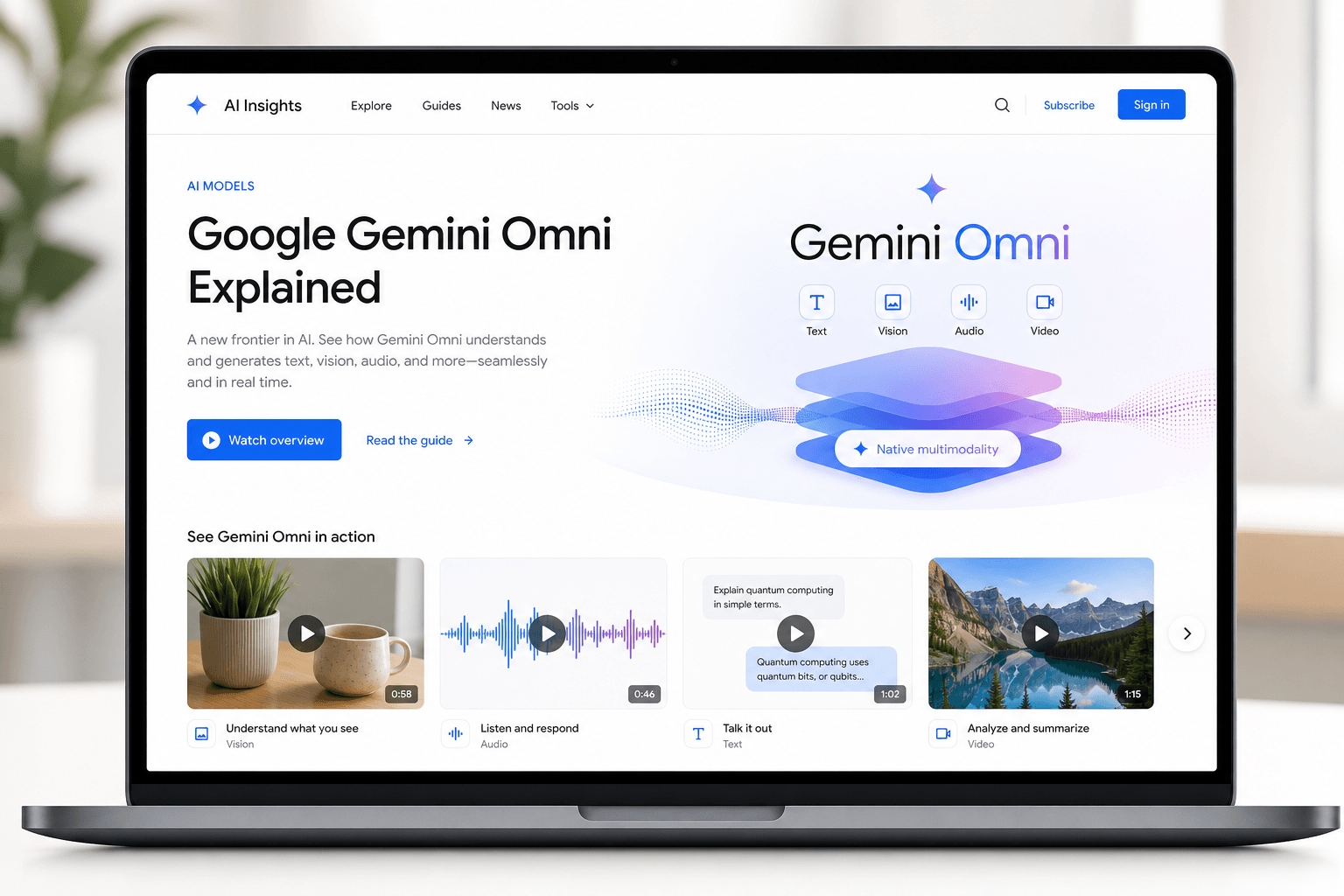
- text inputs
- image inputs
- audio inputs
- video inputs
- high-resolution video output with audio
Google also says the model is built for video creation and conversational editing, which is the part marketers should pay attention to. A lot of AI tools can generate an asset. Far fewer can fit naturally into an actual working content loop.
That difference matters.
Why this looks more commercially relevant than the usual AI video launch
Most AI video tools have been strong at demos and weaker at workflows.
They can make motion, but not consistency. They can make scenes, but not dependable deliverables. They can impress creators, but still leave agencies and business operators stuck piecing together the rest of the job themselves.
Gemini Omni looks more relevant because it pushes in three directions at once.
1. It brings creation and editing into one loop
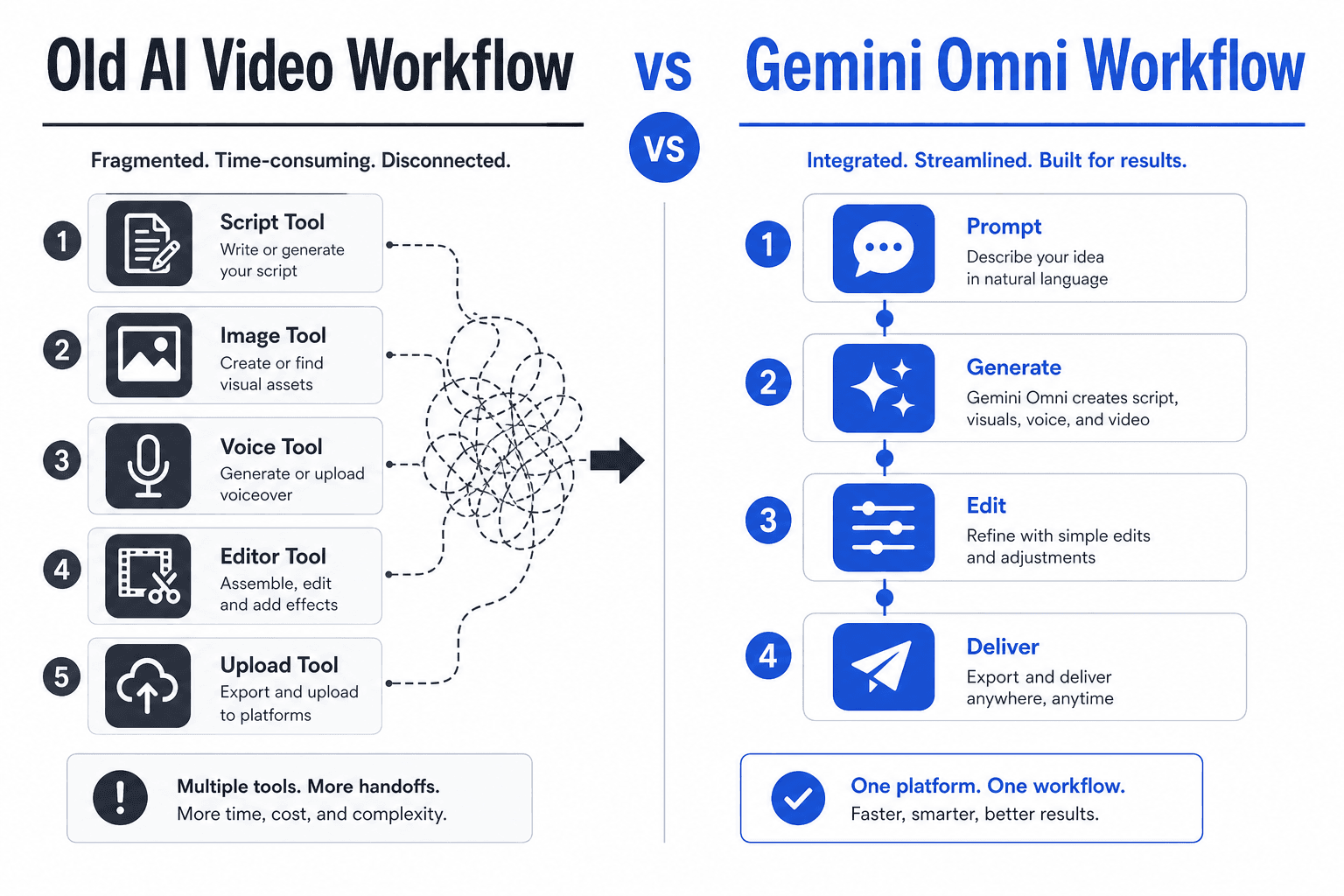
The old AI content flow usually looks like this:
- write prompts in one tool
- generate images in another
- create voice somewhere else
- stitch video together manually
- fix the weird parts in editing
- upload and hope it all feels coherent
That is not a creative workflow. That is a survival routine.
Gemini Omni points toward something cleaner. You prompt, generate, refine, and edit inside a more unified system. That does not remove the need for judgment, but it reduces the friction between idea and usable output.
That alone is a big deal.
2. It pushes toward outputs that feel closer to finished assets
Google is clearly positioning Omni around stronger multimodal understanding, not just prettier rendering. That suggests the goal is not only better visuals, but better instruction following, scene logic, audiovisual alignment, and overall editability.
That does not mean it is flawless. Google’s own model card notes limitations around consistency through edits, scenes with complex motion, and perfectly accurate text rendering.
Good. That honesty is more useful than fake perfection.
The point is not that Omni solves everything. The point is that it appears to move the baseline closer to business-usable content instead of novelty clips.
3. It lowers the production barrier for service businesses
This is the part many people will miss.
The obvious reaction to better AI video is: “Now everyone can make content.”
Maybe.
But the better business question is: who still does not want to make it themselves?
That group is huge.
Small businesses, local operators, consultants, niche brands, coaches, and service companies still need content. They still want visibility. They still want social proof. They still need fresh media. Most of them do not want to learn prompt structures, narrative pacing, audiovisual editing, or AI production hygiene.
They want results without having to become mini production studios.
That creates a much more practical opportunity than chasing views with AI demo clips.
The bigger opportunity is not the tool, it is the packaging
This is where a lot of AI hype goes wrong.
A model release is not a business.
A model release is raw capability.
The business comes from packaging that capability into something people understand and will keep paying for.
If Gemini Omni can reliably help produce:
- social media videos
- local business promos
- explainer content
- fast creative variations
- branded short-form content
- recurring visual content packages
then the real opportunity is not “play with Omni.”
- sell done-for-you content systems
- build agency fulfillment workflows
- create vertical-specific content retainers
- productize recurring short-form delivery
- turn AI generation into service infrastructure
That is a much better angle because it connects the tool to actual commercial behavior.
Businesses do not pay because a model is exciting. They pay because someone helps them look active, visible, relevant, and professionally consistent without wasting their time.
Why agencies and freelancers should care most
If you run an agency, freelance operation, or content service business, Gemini Omni could matter more than it does for hobby creators.
Not because it replaces strategy.
Because it compresses execution.
That changes margins.
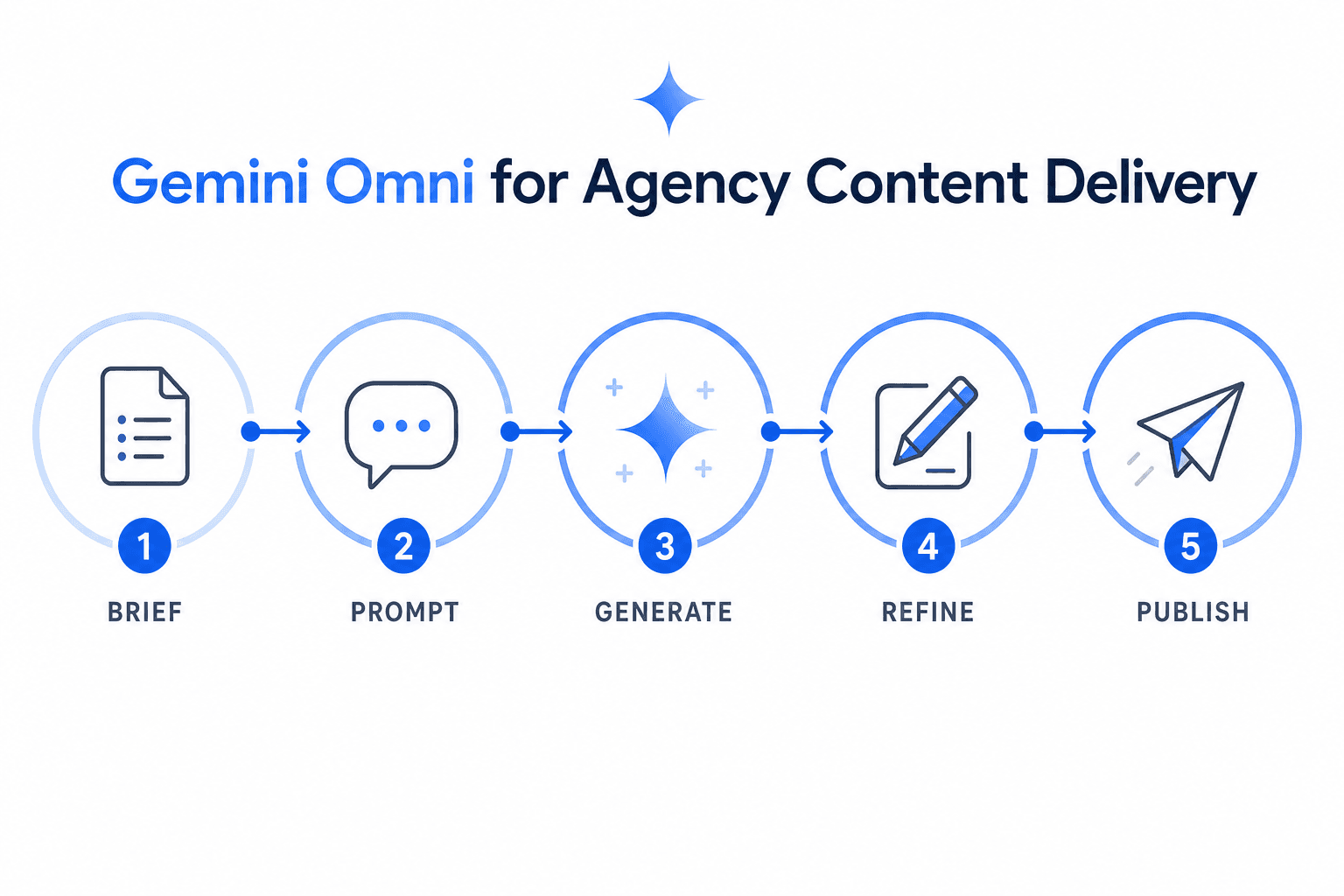
If you can reduce the time required to go from brief to usable visual asset, you get:
- faster delivery
- more content variations
- lower production overhead
- more room for retainer models
- better economics on smaller clients
That last part is especially interesting.
A lot of small business content work has traditionally been annoying to fulfill. The budgets are not huge, the clients still want consistency, and manual production burns time fast. If Omni helps narrow the gap between “good enough to publish” and “good enough to charge for,” it can make those lower-ticket service offers much more viable.
That is not glamorous. It is just useful.
Usually that is where the money hides.
What marketers should not do
Whenever a new model lands, people rush into two bad extremes.
The first bad reaction is panic.
The second bad reaction is breathless nonsense.
Neither helps.
Here is what probably does not make sense:
- assuming every business owner will suddenly become their own AI video producer
- pretending polished visuals alone are now a moat
- selling generic “AI content services” with no niche, no strategy, and no retention logic
- building an offer that depends entirely on tool novelty
That last one matters most.
If your offer is “look what this AI can do,” it will age badly.
If your offer is “I help this type of business publish better content more consistently using better production systems,” that has a much longer shelf life.
The trust layer matters too
Google is also pushing content provenance and verification here, including SynthID and C2PA Content Credentials across content created or edited with Omni in Gemini, Google Flow, and YouTube.
That is not a side note.
The more realistic generated media becomes, the more content trust becomes part of the product itself. Marketers should expect this to matter more, not less. Verification, disclosure, and authenticity signals are going to become part of serious AI media workflows.
That is especially relevant for agencies and businesses using AI-generated content at scale. The visual layer is getting easier. The trust layer is getting more important.
Those two things rise together.
So what is the smartest takeaway?
Not “AI video is solved.”
Not “every creator is finished.”
Not “this changes everything overnight.”
The smarter takeaway is simpler:
Gemini Omni makes AI content creation more operational.
That is the real shift.
It moves the conversation away from isolated generation tricks and closer to integrated production systems. For marketers, agencies, and operators, that is far more useful than another viral demo.
The winners here probably will not be the loudest people posting AI showreels on social media.
They will be the ones who quietly build:
- better fulfillment systems
- cleaner offers
- stronger recurring delivery
- more practical business use cases
That is usually how these tools become real businesses instead of temporary noise.
Final take
Gemini Omni looks like one of the more commercially meaningful AI content launches in a while.
Not because everyone will suddenly become a creator.
Because it gets us closer to a world where one system can help handle ideation, generation, editing, and iteration in a way that actually fits service delivery.
That is the bigger opportunity.
The flashy demo is what gets attention.
The repeatable business model is what matters.